


Flowering Wilderness - The Forsyte Chronicles 8
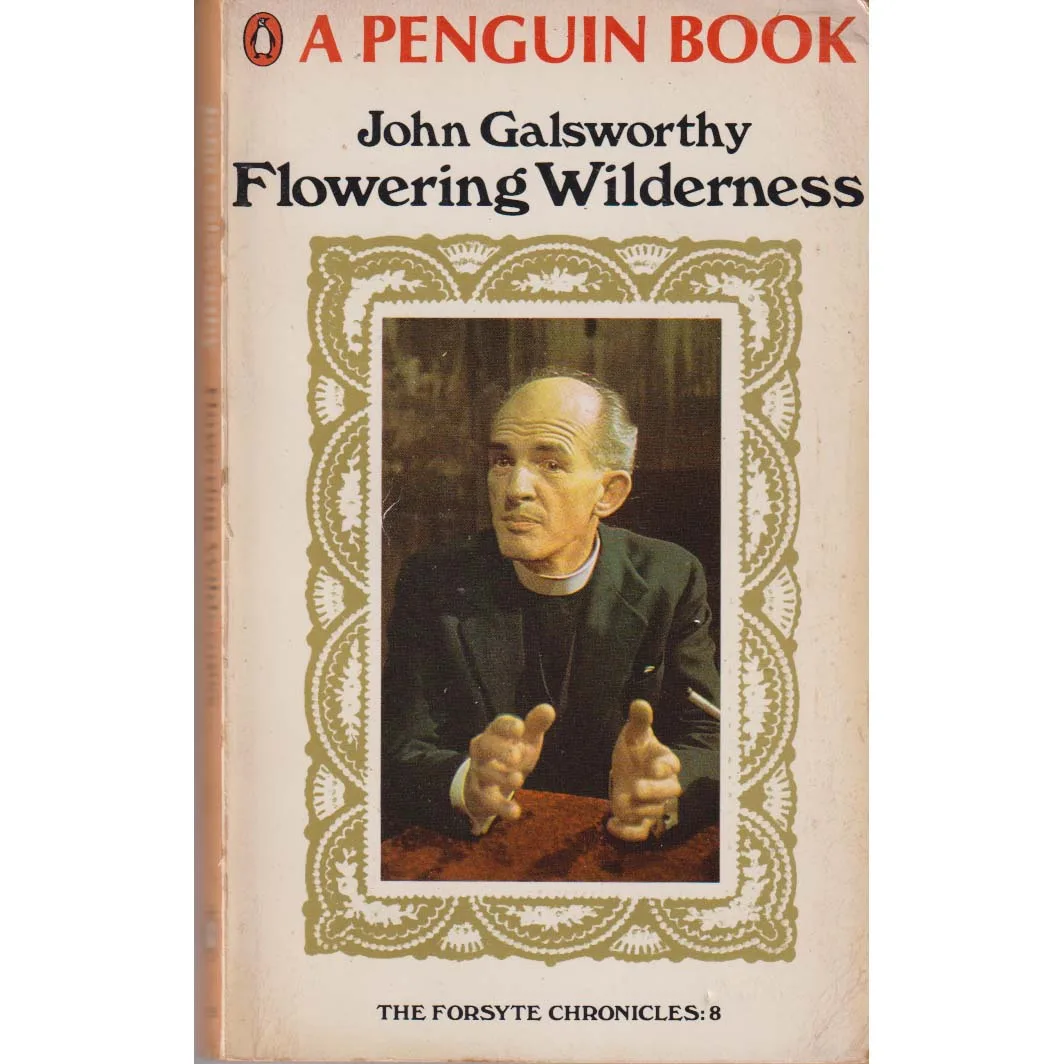
Publisher: Penguin Books
Format: Paperback
ISBN: none
Flowering Wilderness – The Forsyte Chronicles 8 (1969) by John Galsworthy — Penguin Books
ISBN: None (because 1969 assumed you could find volume 8 by following the trail of restrained emotions)
Condition: Good (as sold by Crappy Old Books, where “Good” means “still beautifully readable, still quietly savage”)
If the Forsytes are a family, they’re also a climate—one made of money, manners, and the unshakeable belief that feeling things should be done privately, preferably behind a newspaper. Flowering Wilderness, volume 8 of The Forsyte Chronicles, drops you deep into the later stages of the saga, where the old structures are still standing but the ivy has started to grow through the cracks.
The title is pure Galsworthy: poetic, slightly ironic, and quietly loaded. A “flowering wilderness” is something beautiful and untamed at the same time—growth without neat borders, life that refuses to be pruned into respectability. Which is exactly the tension that keeps haunting the Forsyte world: the struggle between what society expects and what people actually feel, between the carefully kept garden of propriety and the wild, inconvenient jungle of desire, regret, pride, and love.
By this point in the Chronicles, you’re watching a whole social era shift in real time. The polite certainties that powered the earlier Forsyte books—the sense that property equals stability, that reputation is everything, that emotions can be managed like investments—are meeting a modern world that doesn’t quite co-operate. People still cling to respectability, but the future keeps walking in with muddy shoes. The younger generation wants different things. The older generation wants the younger generation to want the same things, but more politely. Everyone is trying to keep control while pretending they aren’t.
Galsworthy’s gift is that he makes these changes feel intimate, not abstract. He doesn’t deliver history as a lecture; he delivers it as dinner conversations, family alliances, romantic miscalculations, and those tiny moments where you can feel someone’s whole inner life behind a carefully neutral phrase. The drama is understated, but it’s relentless. It’s the slow burn of people realising they can’t have everything they want—and also can’t quite stop wanting it.
And yes, it’s often very funny, in that dry, exact way Galsworthy has of exposing hypocrisy without ever raising his voice. He can make a polite remark land like a slap. He can show you a character being “reasonable” while behaving terribly. He can make you sympathise with someone and judge them at the same time. That’s the Forsyte experience: empathy with a side of exasperation.
This particular copy is a 1969 Penguin Books edition, which is ideal—classic packaging for a classic saga, practical enough to carry around while you privately observe the English upper middle class doing what it does best: handling enormous feelings with small gestures. Condition is Good, from Crappy Old Books, meaning it’s solid, readable, and gently worn in the honest vintage-paperback way—perhaps a bit of shelf rub, a touch of page toning, nothing that stops it doing its job.
Buy it if you like:
-
family sagas where the real stakes are social and emotional
-
British novels that turn understatement into high drama
-
changing times, shifting values, and the chaos of people pretending they’re fine
-
a story that’s elegant on the surface and thorny underneath
Flowering Wilderness is the Forsyte world at a late, rich stage: the garden still looks respectable, but something wilder is growing—and you can’t unsee it once you notice. In Good condition from Crappy Old Books, ready to deliver another beautifully controlled dose of English life, with all its polite little catastrophes.
Keep browsing: See more Fiction books Other books by John Galsworthy
